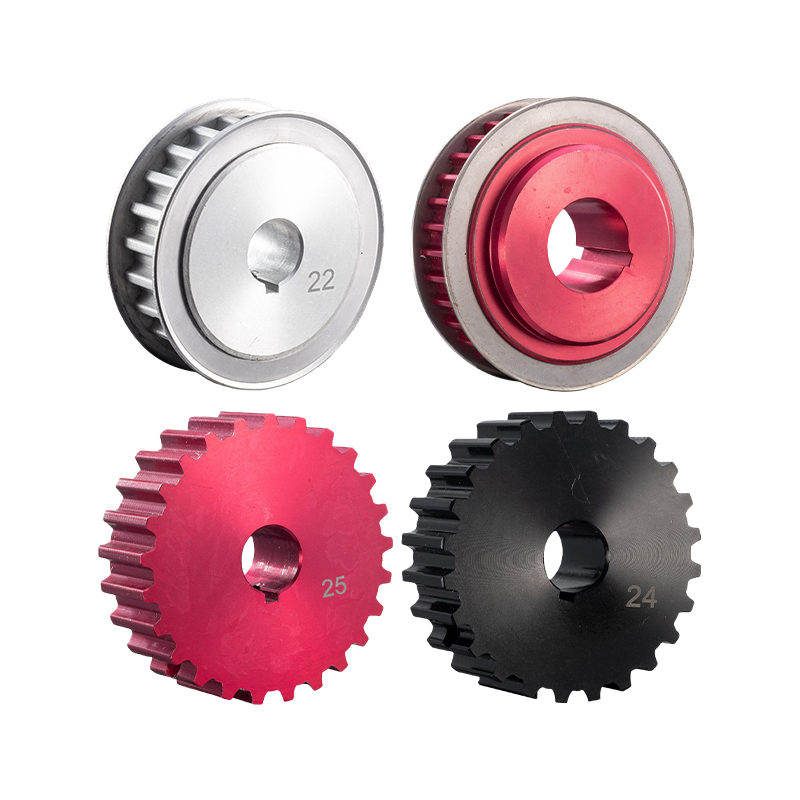
In modern automated assembly line systems, aluminum alloy synchronous pulleys, as key power transmission components, are widely used in CNC equipment, conveyor systems, and precision positioning mechanisms. Their core function is to achieve precise power transmission and position control through synchronous belts. In high-speed operation environments, equipment often needs to operate continuously for extended periods. If eccentricity occurs during pulley installation, it will trigger a series of chain reactions, including transmission asynchrony, increased vibration, and expanded positioning errors.1. Improve machining accuracy to ensure datum consistency
One root cause of installation eccentricity is insufficient machining accuracy of the components themselves. If there is a slight deviation between the center hole and tooth profile of the pulley, it will be amplified into a significant synchronization error during high-speed rotation. Therefore, high-precision CNC machining processes are needed during the manufacturing stage to perform one-time clamping and forming of the center hole and tooth profile, reducing the cumulative error caused by multiple clamping operations. Simultaneously, precision dynamic balancing can effectively reduce rotational unevenness, ensuring the pulley remains stable during high-speed operation and reducing the risk of eccentricity from the source.
2. Optimize Installation Structure to Improve Positioning Accuracy
During assembly, the design of the installation structure directly impacts eccentricity control. An unreasonable positioning structure, relying solely on simple bushing fits, can easily lead to installation misalignment. Therefore, it's necessary to improve the concentricity between the pulley and shaft by adding high-precision positioning keyways or tapered fit structures. Simultaneously, using interference fits or shrink sleeve structures can effectively reduce assembly clearances, ensuring the pulley maintains a stable centered position after installation, thereby reducing the probability of synchronization errors.
3. Introduce Precision Inspection Methods to Control Assembly Errors
In automated assembly lines, relying solely on manual experience is insufficient to guarantee consistent installation accuracy. Therefore, high-precision inspection equipment, such as laser alignment instruments or coordinate measuring machines, is needed to monitor the concentricity of the pulleys in real time after installation. If eccentricity errors exceed the allowable range, timely adjustments and corrections can be made. Furthermore, pre-inspecting the shaft and pulley before assembly can effectively prevent defective parts from entering the assembly process, thereby improving overall assembly quality.
4. Optimize Assembly Processes to Reduce Human Error
Human error during assembly is a significant factor contributing to misalignment. Therefore, in automated assembly lines, introducing automated assembly equipment or auxiliary positioning fixtures can improve installation consistency. For example, automatic centering fixtures can automatically correct the position during installation, ensuring the pulley remains on the central axis. Simultaneously, standardized assembly processes and torque control technology can reduce misalignment caused by inconsistent operation, improving overall assembly accuracy.
5. Enhance Operational Monitoring Capabilities for Dynamic Correction
Even under high-precision installation conditions, long-term operation may still result in slight misalignment due to wear or loosening. Therefore, introducing operational status monitoring technology into the system is crucial. For example, vibration sensors and displacement monitoring systems can detect the pulley's operating status in real time and provide early warnings for abnormal misalignment. Furthermore, combining this with a smart control system for dynamic compensation can correct operational errors to a certain extent, thereby ensuring long-term synchronization accuracy.
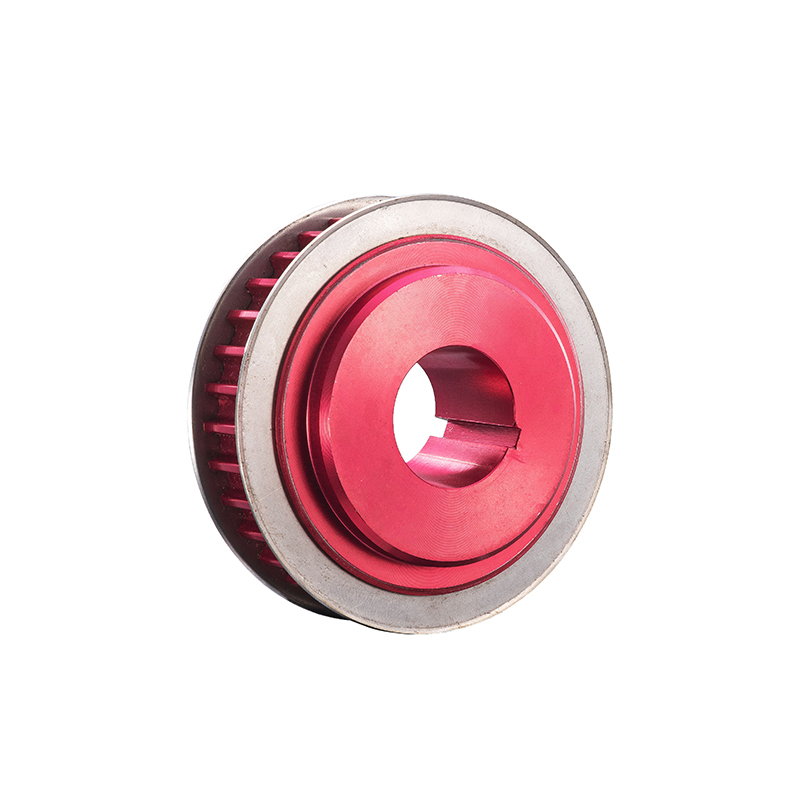
In conclusion, during high-speed operation of automated assembly lines, improving machining accuracy, optimizing installation structure, introducing precision testing, refining assembly processes, and strengthening operational monitoring can effectively reduce synchronization errors caused by installation eccentricity in aluminum alloy synchronous pulleys. This not only helps improve the stability and accuracy of the transmission system but also significantly enhances the overall operating efficiency and reliability of the production line.