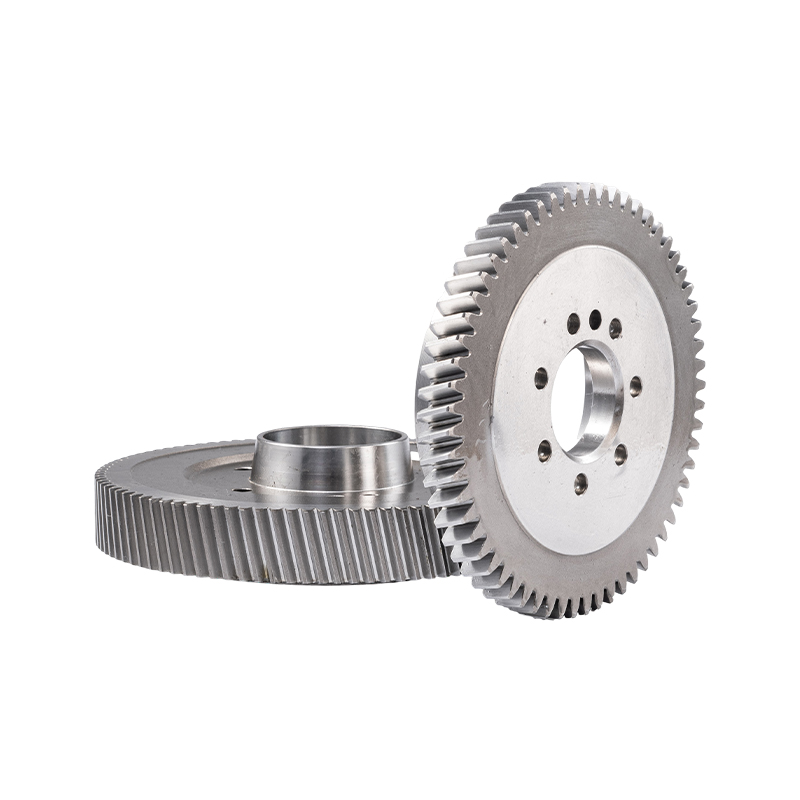
With the rapid development of intelligent robots, the performance of core transmission components directly determines the overall response speed, control accuracy, and long-term reliability of the robot. High-quality custom helical gears, due to their smooth meshing, high load-bearing capacity, and low noise, are widely used in robot joints and precision transmission systems. However, in actual operation, intelligent robots often need to start and stop frequently and withstand complex and constantly changing dynamic loads during grasping, handling, and rotation actions. This places higher demands on the structural design and material properties of helical gears.1. High-strength materials enhance impact resistanceUnder high-frequency start-stop conditions, helical gears frequently experience instantaneous torque impacts. If the material strength is insufficient, tooth surface fatigue or microcrack propagation can easily occur. Therefore, high-quality custom helical gears typically use high-strength alloy steel or materials that have undergone special heat treatment to improve overall impact resistance. Meanwhile, surface carburizing, quenching, or nitriding treatments can significantly enhance tooth surface hardness, ensuring structural integrity and durability even during frequent start-stop cycles.2. Optimized Tooth Profile Design Enhances Load AdaptabilityThe tooth profile design of helical gears has a significant impact on dynamic load adaptability. A reasonable helix angle design can make the meshing process smoother, thereby dispersing instantaneous impact forces and reducing local stress concentration. In intelligent robot applications, optimizing the tooth surface contact ratio allows the load to be evenly distributed across multiple tooth surfaces, thus improving the system's stability under complex dynamic conditions. This design not only improves load-bearing capacity but also reduces vibration and noise during operation.3. Precision Machining Enhances Meshing StabilityIn high-frequency start-stop scenarios, gear meshing accuracy directly affects motion response and control precision. High-quality custom helical gears typically employ high-precision CNC machining and gear grinding processes to control tooth surface errors within a minimal range, ensuring smooth and stable meshing. Precision machining not only reduces transmission backlash but also effectively reduces backlash error, allowing the robot to maintain high-precision control performance during rapid start-stop cycles and direction changes.
4. Enhanced Lubrication and Heat Dissipation Design for Continuous Operation
Under complex dynamic loads, helical gears are prone to heat accumulation and accelerated wear during long-term high-speed operation. Therefore, a well-designed lubrication system is crucial. Using high-performance grease or oil mist lubrication can form a stable oil film on the gear surface, reducing frictional losses. Simultaneously, optimizing the gearbox's heat dissipation structure helps to release heat generated during operation in a timely manner, thus maintaining the gear's performance stability during long-term high-frequency operation.
5. Structural Optimization for Improved Fatigue LifeIntelligent robots typically require long-term continuous operation, meaning helical gears must possess excellent fatigue resistance. Incorporating stress optimization concepts into the structural design, such as increasing the root fillet radius or using a gradual load structure, can effectively reduce stress concentration. Furthermore, a reasonable modal design can reduce the risk of resonance, thereby extending the overall service life of the gears.6. Enhanced Dynamic Response Through System CollaborationIn intelligent robot systems, helical gears are not only single transmission components but also need to work collaboratively with the motor control system and sensing system. Through real-time feedback control, the output torque can be dynamically adjusted according to load changes, ensuring the gears are always within a reasonable stress range. This mechatronics-integrated control method enables helical gears to maintain stable operation even under complex dynamic loads.Therefore, high-quality custom helical gears, through the integration of high-strength materials, optimized tooth profile design, precision machining processes, lubrication and heat dissipation systems, and mechatronics-integrated control, can effectively adapt to the operational needs of intelligent robots in high-frequency start-stop and complex dynamic load changes, providing reliable and stable core transmission support for high-performance robot systems.