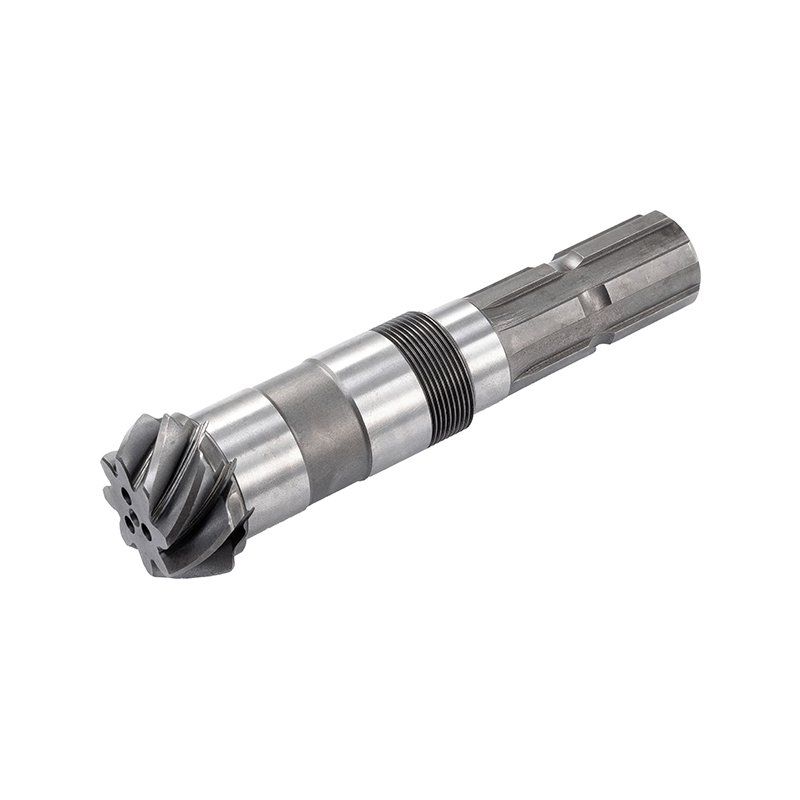
The reliability and efficiency of power transmission directly determine the upper limit of overall machine performance. The high-torque alloy steel gear drive shaft, as the core hub connecting the power source and the actuator, is the "backbone" that bears extreme loads and achieves precise and efficient transmission. It not only needs to withstand torque impacts of tens of thousands of Newton-meters, but also maintain structural stability and motion precision under complex conditions such as high speed, high temperature, and vibration. Behind its superior performance lies a systematic technological code integrating materials science, heat treatment processes, precision manufacturing, and structural optimization.
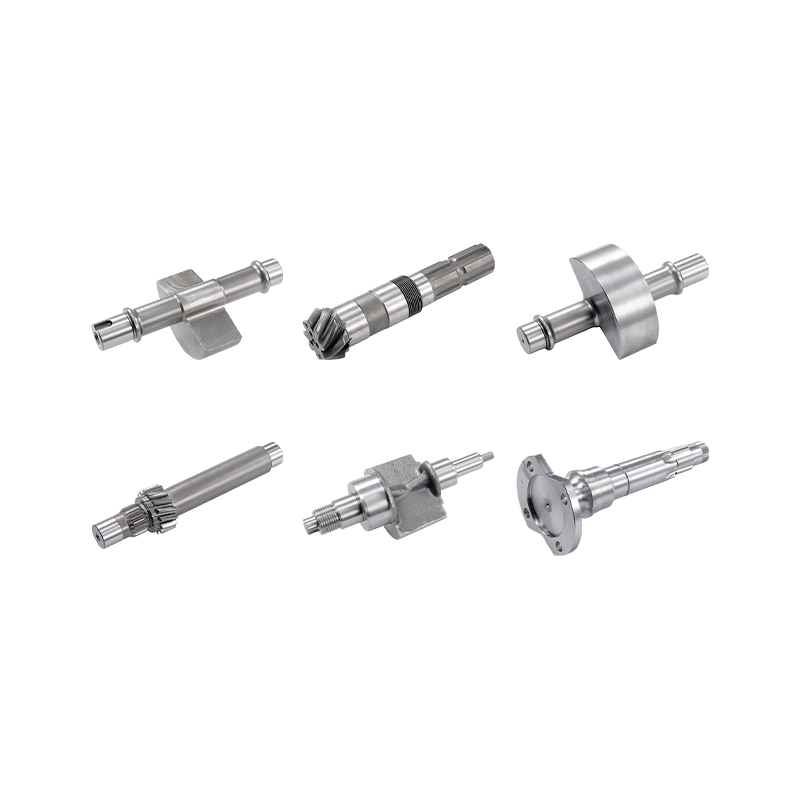
1. Alloy Steel Selection: Laying the Dual Foundation of High Strength and ToughnessThe performance starting point of a high-torque drive shaft lies in its materials. Ordinary carbon steel is prone to plastic deformation or fatigue fracture under heavy loads, while high-performance alloy structural steel significantly improves its comprehensive mechanical properties by adding alloying elements such as chromium, molybdenum, nickel, and manganese.Chromium and molybdenum enhance hardenability and high-temperature strength, ensuring uniform high hardness even in the shaft core.Nickel improves low-temperature toughness, preventing brittle fracture.Trace amounts of vanadium or titanium refine the grain structure and inhibit high-temperature creep.These elements work synergistically, giving alloy steel both high tensile strength and good impact toughness after tempering. Under sudden overloads, it resists deformation without instantaneous failure due to brittleness.2. Precision Heat Treatment: A Key Process for Activating Material PotentialMaterials are only the foundation; the real performance leap comes from the precise control of multi-stage heat treatment processes.First, normalizing or annealing eliminates forging stress and refines the original microstructure. Then, overall tempering is performed to obtain a tempered sorbite matrix, balancing strength and toughness. Crucially, deep cryogenic treatment promotes the transformation of retained austenite to martensite, improving dimensional stability and wear resistance. Drive shafts treated in this way exhibit almost no "run-in" deformation under long-term alternating loads, ensuring a constant transmission ratio.3. Integrated Gear Shaft Design: Eliminating Weak Points and Enhancing System RigidityTraditional split structures suffer from stress concentration, fretting wear, and loosening risks. Simultaneously, finite element topology optimization is employed for areas such as shaft shoulders and transition fillets. Based on the maximum principal stress distribution, the optimal profile curve is designed, minimizing the risk of fatigue crack initiation.4. Ultra-Precision Manufacturing: Micron-Level Precision Ensures Efficient and Low-Noise OperationEven the best materials and heat treatments can lead to premature failure if machining is rough. The manufacturing of high-torque drive shafts adheres to the principle of "precision":CNC milling and turning ensures shaft diameter coaxiality ≤0.01mm;High-precision gear grinding controls tooth profile error <5μm, and tooth profile modification compensates for thermal deformation and load skew;Dynamic balancing is corrected to G2.5 level or higher, eliminating unbalanced forces during high-speed rotation.These processes ensure that the drive shaft operates at full load with noise levels below 75dB and vibration speed <2.8mm/s, meeting the stringent requirements of high-end equipment for quiet operation and stability.5. Synergistic Lubrication and Sealing: Building a Long-Term Reliable Operating EcosystemHigh-efficiency transmission relies on a good lubrication environment. High-torque drive shafts often integrate internal oil channels or oil slinger structures, actively splashing lubricating oil to the gear meshing area during rotation, forming an elastic hydrodynamic oil film, significantly reducing the coefficient of friction and wear rate. Simultaneously, both ends employ a combination of double-lip fluororubber oil seals and labyrinth seals, preventing lubricating oil leakage and blocking external dust and moisture intrusion—especially in harsh environments such as mines and ports, this design can extend maintenance cycles by more than three times.The superior performance of high-torque alloy steel gear drive shafts is not a victory of a single technology, but rather the integrated result of materials, design, process, and system. With alloy steel as its skeleton, heat treatment as its soul, precision manufacturing as its pulse, and lubrication and sealing as its shield, it silently transmits surging power under extreme operating conditions. From excavators thousands of meters underground to wind turbine blades hundreds of meters in the sky, this seemingly silent metal shaft, with its millimeter-level precision and the ability to bear the force of tens of thousands of tons, embodies the core values of "high efficiency, reliability, and longevity" in high-end equipment. Unlocking its performance secrets is the key to unlocking the future of "Made in China" – a future characterized by heavy loads, high speeds, and high reliability.