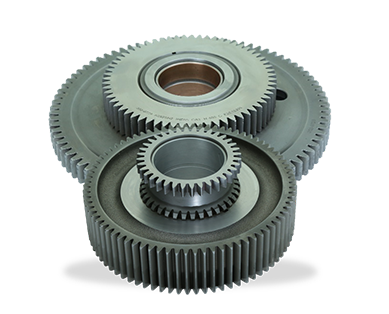
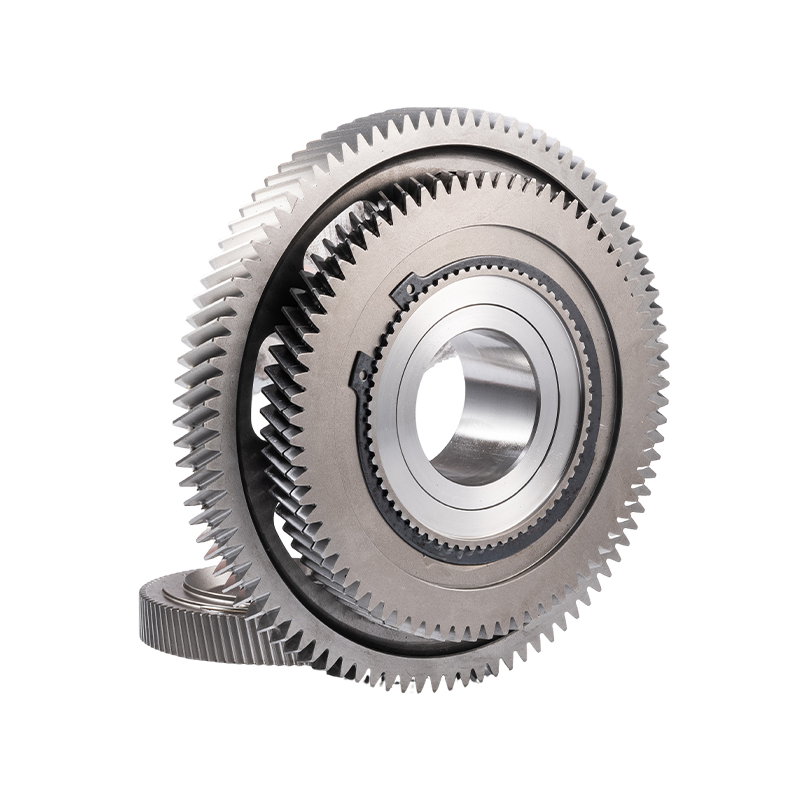
How can special vehicle engine gear achieve both quietness and strength through material optimization?
Publish Time: 2026-01-09
In the field of special vehicles—especially heavy-duty trucks undertaking high-intensity, long-distance transportation tasks—engine gears, as the core component of the power transmission system, directly affect the reliability, fuel efficiency, and driving comfort of the entire vehicle. Faced with the dual challenge of requiring both high strength and toughness to withstand continuous high loads and low noise to improve the driving experience, traditional gear materials are no longer sufficient to meet modern engineering requirements. Through the deep integration of advanced materials science and precision heat treatment processes, special vehicle engine gears have achieved synergistic optimization of "quietness" and "robustness" at the material level, providing a quieter, more durable, and more efficient power solution for long-haul trucks.1. The Contradiction Between Quietness and Robustness: The Performance Bottleneck of Traditional GearsWhile ordinary carbon steel or low-alloy steel gears possess a certain strength, they are prone to generating minute vibrations and impact noise during high-frequency meshing. Especially under high-speed, heavy-load conditions, the risk of tooth surface wear, pitting, and even tooth breakage increases significantly. Simply increasing hardness to enhance wear resistance often leads to increased material brittleness and decreased impact resistance; conversely, pursuing toughness at the expense of hardness results in easily deformed tooth surfaces, accelerated wear, and consequently, worsened noise. This contradiction of "strong but not tough, tough but not strong" has long constrained breakthroughs in gear performance. Therefore, the key to achieving both quiet operation and high strength lies in innovation across the entire chain, from material composition design and microstructure control to surface functionalization.2. High-Purity Alloy Steel: The Cornerstone of a Strong and Tough MatrixModern special vehicle engine gear commonly uses high-purity chromium-molybdenum alloy steel or nickel-chromium-molybdenum carburized steel. These materials utilize vacuum degassing technology to control harmful impurities such as sulfur, phosphorus, and oxygen to extremely low levels, significantly reducing non-metallic inclusions and thus improving the material's fatigue strength and impact toughness. Simultaneously, precise control of the proportions of elements such as carbon, chromium, nickel, and molybdenum allows for the formation of a fine and uniform martensite + retained austenite composite structure after carburizing heat treatment. This ensures both high core toughness and high surface hardness, effectively resisting contact fatigue and bending stress.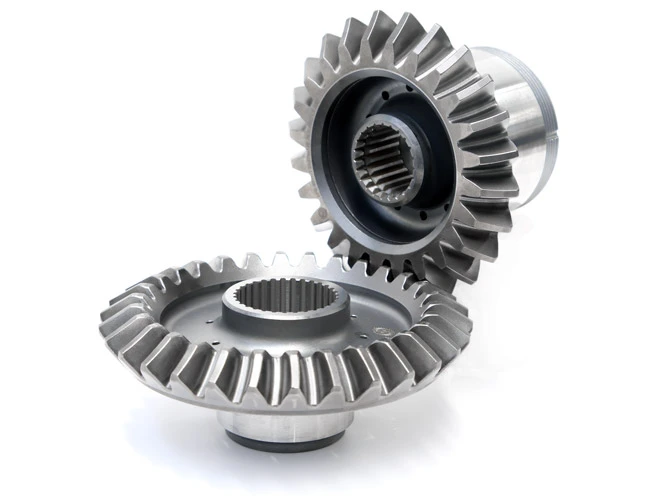 3. Carburizing and Carbonitriding: Gradient Strengthening for Quiet OperationTo balance surface hardness and core toughness, controlled atmosphere carburizing or carbonitriding has become the mainstream process. By precisely controlling the carbon potential, temperature, and time, a high-carbon hardened layer with a depth of 1.0–2.5 mm can be formed on the gear surface, while the core maintains a low-carbon toughness structure. More importantly, the optimized carburized layer has a gentle hardness gradient, avoiding microcracks that are prone to occur in traditional steep transition zones, thus significantly reducing dynamic excitation noise during meshing. Some high-end products also incorporate cryogenic treatment, promoting the transformation of retained austenite into martensite, further stabilizing the microstructure, improving dimensional accuracy, and reducing micro-vibrations during operation.4. Surface Micromorphology and Coating Technology: Suppressing Noise at its SourceEven with excellent material properties, tooth surface roughness and micromorphology remain significant sources of noise. Therefore, modern special gears commonly employ ultra-precision machining or post-grinding polishing to significantly reduce frictional noise. Furthermore, physical vapor deposition diamond-like carbon coatings or molybdenum sulfide solid lubricating films are applied to high-stress areas. These coatings not only reduce the coefficient of friction but also absorb micro-vibration energy, acting as "acoustic damping," reducing the impact sound pressure level of the gear at the moment of meshing, effectively halving the perceived noise level.5. Material-Structure Co-design: System-Level Noise Reduction OptimizationMaterial optimization is not conducted in isolation but is deeply coupled with gear geometry design. For example, modified tooth profiles and tooth direction bulging corrections can compensate for thermal deformation and assembly errors, ensuring uniform load distribution along the tooth width and avoiding high-frequency squealing caused by edge contact. The high dimensional stability of high-purity alloy steel provides the manufacturing foundation for such precision modifications. Furthermore, some manufacturers have developed damping alloy composite gears, embedding high-loss metals in the spokes or hubs to dissipate vibration energy through the material itself, achieving "structural sound absorption" and further improving the overall NVH performance of the vehicle.