How can high-precision tooth profile machining ensure that aluminum alloy synchronous pulleys maintain synchronization and slip-free operation at high speeds?
Publish Time: 2025-12-26
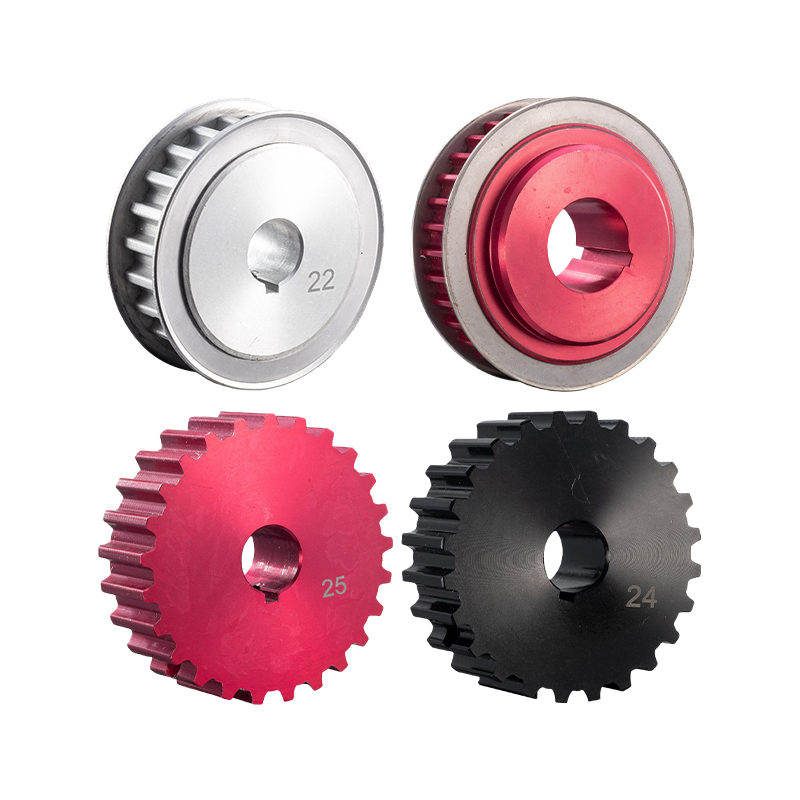
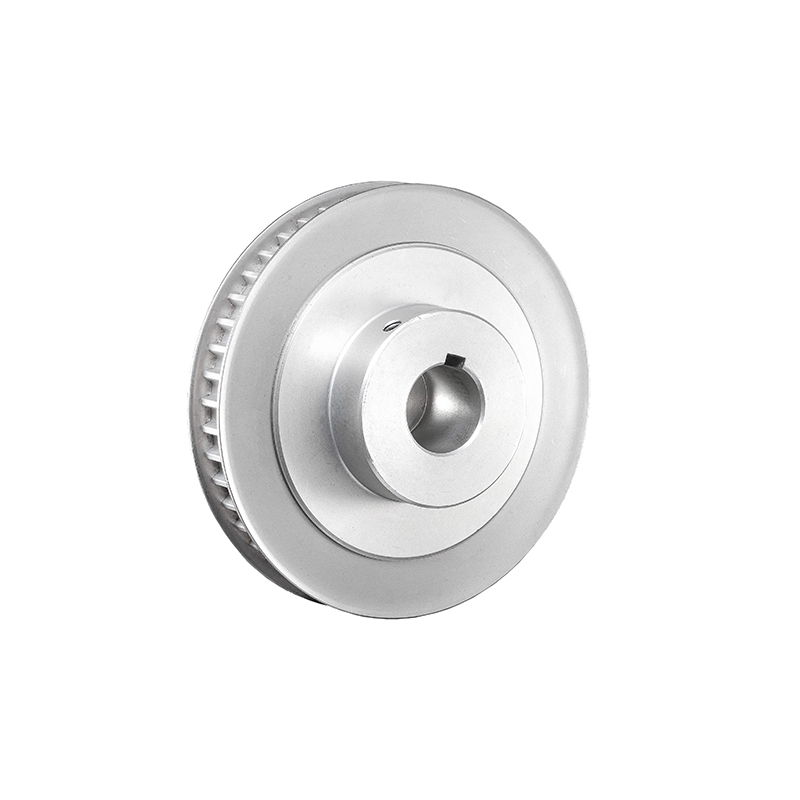
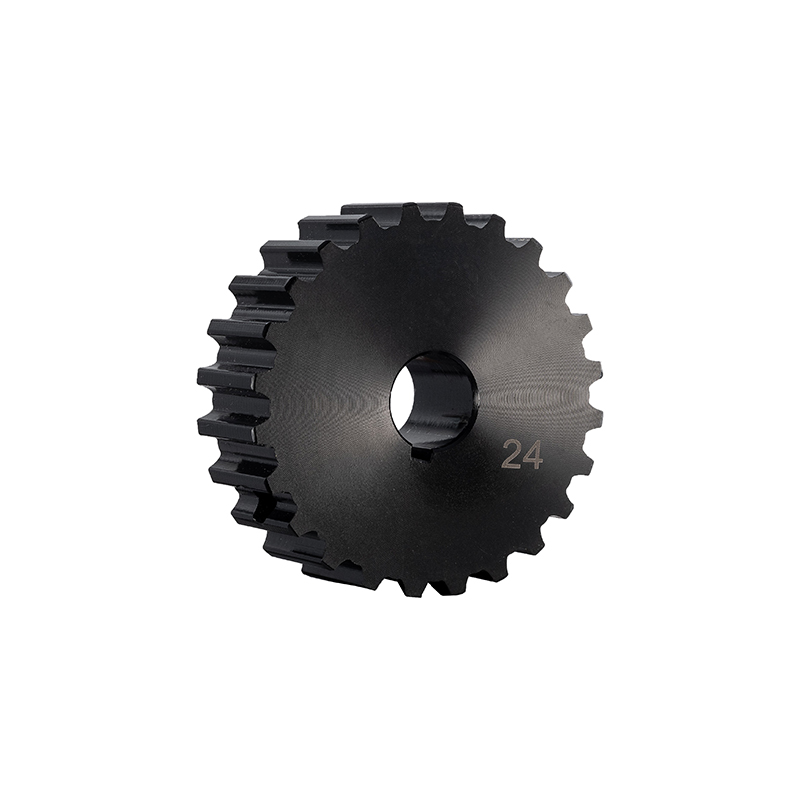
In modern precision manufacturing, whether it's the multi-axis linkage of CNC machine tools or the micron-level positioning of 3D printers, the precision and stability of the transmission system directly determine the quality of the final product. As one of the core transmission components, the synchronous pulley plays a crucial role in accurately converting the rotational motion of a motor into linear or angular displacement. Aluminum alloy synchronous pulleys, through a combination of high-precision tooth profile machining technology and scientific material processing, have successfully achieved the performance goals of "zero-error transmission" and "high-speed slip-free operation," becoming an indispensable precision component in automated equipment.1. Tooth Profile Precision: The Geometric Basis of Synchronous TransmissionThe essence of synchronous belt transmission is "meshing transmission"—the pulley teeth and synchronous belt teeth must achieve perfect matching and gapless meshing to avoid the elastic slippage found in traditional belt drives. Any pitch error, tooth profile deviation, or cumulative tolerance will be amplified during high-speed operation, leading to positioning drift, vibration, or even loss of synchronization.To this end, high-end aluminum alloy synchronous pulleys utilize CNC five-axis machining centers with diamond-coated tools for tooth profile cutting, controlling the tooth pitch error to within ±0.01mm and achieving IT6-level precision in tooth profile accuracy. Some products further incorporate online laser interferometer inspection or three-coordinate measurement for full inspection, ensuring the tooth profile consistency of each pulley. This "ultra-precision tooth profile" allows the synchronous belt to maintain rigid engagement during high-speed start-stop and reverse switching, completely eliminating slippage and achieving true zero-backlash transmission.2. Lightweight Aluminum Alloy Body: Enhancing Dynamic Response PerformanceThe main structure typically uses high-strength aluminum alloy, with steel bushings or steel-core composite structures only embedded in critical load-bearing areas. This design balances lightweight construction with strength requirements:Low rotational inertia: Aluminum alloy has only 1/3 the density of steel, significantly reducing pulley rotational inertia within the same dimensions. This allows servo motors or stepper motors to accelerate/decelerate faster, significantly improving the motion response speed and positioning agility of 3D printer nozzles or machine tool tables.Vibration and noise reduction: Aluminum alloy has excellent damping characteristics, absorbing high-frequency vibrations, reducing transmission system resonance, and ensuring that the printed surface finish or machined surface roughness meets standards.Matching thermal expansion coefficient: The thermal expansion behavior of aluminum alloy is closer to that of commonly used synchronous belts, avoiding backlash changes caused by temperature rise.3. Steel core + surface treatment: Enhanced durability and environmental adaptabilityFor high-load or long-term continuous operation scenarios, some high-performance aluminum alloy synchronous pulleys adopt a steel core embedded structure—the inner hole or hub uses 45# high-quality carbon steel, tempered and quenched to a hardness of HRC45–50, ensuring a firm and reliable interference fit with the motor shaft, and torsional strength far exceeding that of pure aluminum structures.Meanwhile, the entire product undergoes multiple surface protections:Aluminum alloy wheel body: Hard anodizing treatment forms a dense Al₂O₃ ceramic layer with a hardness exceeding HV400, providing wear resistance, corrosion resistance, and insulation and antistatic properties.Steel components: Nickel or zinc plating for passivation effectively isolates them from industrial environments such as moisture, oil mist, and cleaning agents, preventing loosening or contamination caused by rust.This "aluminum-steel composite + double protection" strategy makes the pulley both lightweight and robust, suitable for deployment in all scenarios, from cleanroom 3D printing to automation in oily workshops.4. System-level matching: Achieving "zero error" in synergy with synchronous beltsThe value of a high-precision pulley is fully realized when working in conjunction with a matched synchronous belt. High-quality polyurethane or rubber-based synchronous belts incorporate high-modulus glass fiber or aramid tension lines, resulting in virtually no tensile deformation. When a high-precision toothed pulley meshes with it:The tooth tip and tooth root are perfectly aligned, eliminating the risk of "tooth skipping";The tooth flank pressure angle is precisely controlled, ensuring smooth torque transmission;Even at linear speeds up to 5 m/s, it maintains a positioning repeatability accuracy of ±0.02 mm/m.In 3D printers, this means no misalignment between model layers and precise forming of overhanging structures; on CNC machine tools, it ensures consistency and surface integrity in the machining of complex curved surfaces.5. Application Scenario Verification: From Desktop Devices to Industrial Production Lines3D Printers: Lightweight aluminum alloy pulleys reduce the workload on the Z-axis or XY-axis, increasing printing speeds to over 200 mm/s without sacrificing accuracy;CNC Machine Tools: Used in feed systems or tool changers, supporting high-acceleration reciprocating motion with a lifespan exceeding 20,000 hours;Automated Assembly Lines: In robotic conveyors and vision positioning platforms, it ensures consistent workpiece positioning each time, supporting flexible manufacturing.High-precision tooth profile machining is not only a reflection of manufacturing processes but also the starting point for system-level precision control. Aluminum alloy synchronous pulleys, through a comprehensive design combining "precision tooth profile + lightweight body + steel core reinforcement + multiple protections," truly achieve the engineering goals of zero-slip synchronization and zero-error transmission under high-speed, high-dynamic, and high-reliability requirements. Although operating silently inside equipment, they are indispensable "precision gears" behind modern intelligent and digital manufacturing. As Industry 4.0 continues to demand higher positioning accuracy and energy efficiency, these high-performance synchronous pulleys will continue to play a crucial role, driving precision transmission to even greater heights.